
Expert Venous Insufficiency Treatment
When symptoms affect your daily activities and quality of life, finding effective venous insufficiency treatment becomes essential. This common condition responds well to appropriate care, and most patients achieve significant improvement with proper treatment. Understanding your options helps you make informed decisions about your care.
At Madison Medical, we provide comprehensive evaluation and treatment for this condition. Our experienced specialists use evidence-based approaches to identify underlying causes and develop personalized treatment plans that address your specific needs and goals.
Nifhmu l-Kundizzjoni
This condition develops when tissues become irritated, injured, or dysfunctional. Various factors contribute including overuse, acute injury, biomechanical problems, and age-related changes. Understanding what’s causing your specific symptoms guides appropriate treatment selection and improves outcomes.
The severity ranges from mild discomfort to significant functional limitation. Early intervention typically produces better outcomes than waiting for symptoms to become severe or chronic. Proper evaluation ensures accurate diagnosis and targeted treatment.
Nagħrfu Sintomi
Pain is typically the primary symptom, ranging from mild aching to severe discomfort. The pain may worsen with certain activities or movements specific to your condition. Swelling, stiffness, and reduced range of motion often accompany the primary symptoms. Some patients experience weakness or functional limitations.
Symptoms may develop gradually over time from repetitive stress or appear suddenly following injury. The pattern of your symptoms helps identify the specific structures involved. Associated symptoms provide additional diagnostic information.
Sintomi Komuni
- uġigħ: Localized discomfort that may worsen with specific activities
- Nefħa: Inflammation causing visible or palpable changes
- Ebusija: Reduced flexibility particularly after rest
- Dgħjufija: Decreased strength affecting daily function
- Limitazzjoni funzjonali: Difficulty with specific tasks or movements
Kawżi u Fatturi ta 'Riskju
Multiple factors contribute to this condition. Overuse from repetitive activities places chronic stress on tissues. Acute injuries from falls, sports, or accidents cause sudden damage. Age-related degeneration weakens structures over time. Poor mechanics increases stress on vulnerable tissues.
Risk factors include participation in certain activities or occupations, previous injuries, inadequate conditioning, and specific anatomical variations. Identifying contributing factors helps guide both treatment and prevention strategies.
Evalwazzjoni Dijanjostika
Comprehensive evaluation begins with detailed history about symptom onset, character, and aggravating factors. Physical examination identifies specific areas of tenderness, assesses range of motion and strength, and performs special tests that evaluate specific structures.
Imaging studies may include X-rays to evaluate bone structures and MRI or ultrasound to visualize soft tissues. The choice of imaging depends on suspected diagnoses and physical examination findings. Laboratory testing may be appropriate for certain conditions.
Għażliet ta 'Trattament
Conservative treatment resolves most cases effectively. Activity modification reduces stress on affected tissues while healing progresses. Ice and anti-inflammatory medications help control pain and inflammation. Bracing or support may be beneficial depending on the specific condition.
Physical therapy addresses underlying factors, strengthens supporting structures, and restores normal function. Manual therapy techniques may improve tissue mobility and reduce pain. A structured rehabilitation program optimizes recovery and prevents recurrence.
Injection treatments deliver medication directly to affected tissues when oral treatments are insufficient. Various injection options exist depending on the specific condition. These may provide significant relief when conservative measures alone are inadequate.
Surgical treatment is considered when conservative measures fail to provide adequate relief. Modern surgical techniques often use minimally invasive approaches with faster recovery times. Surgical decisions depend on the specific diagnosis and individual patient factors.
Preventing Disease Progression
Early treatment prevents venous insufficiency from progressing to more serious stages. Compression therapy, even when symptoms are mild, protects veins from further damage. Exercise and weight management reduce venous pressure. Avoiding prolonged standing or sitting limits blood pooling.
Elevating legs above heart level for 15-20 minutes several times daily helps drain pooled blood. This simple intervention reduces symptoms and supports long-term vein health. Making elevation a daily habit provides ongoing benefit.
Monitoring for warning signs prompts timely intervention. Increasing swelling, skin color changes, or areas of thickening skin suggest progressing disease. New or worsening symptoms should be evaluated promptly.
Understanding Chronic Venous Insufficiency
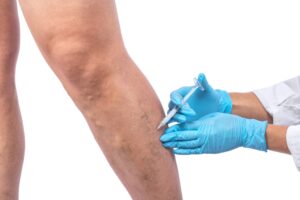
Venous insufficiency occurs when leg veins can’t efficiently return blood to the heart. Normally, one-way valves in veins prevent backflow and calf muscle contraction pumps blood upward. When valves fail or muscles weaken, blood pools in the legs, causing pressure, swelling, and progressive tissue damage.
Symptoms progress through stages. Early stages involve leg heaviness, aching, and mild swelling that improves with elevation. Later stages include skin changes – darkening, thickening, and eczema-like changes around the ankles. Most severe stages develop venous ulcers, wounds that heal slowly and frequently recur.
The condition affects millions of people and significantly impacts quality of life. Many people don’t realize their leg symptoms relate to vein problems or that effective treatment exists.
Compression therapy remains the foundation of venous insufficiency management. Properly fitted medical-grade compression stockings significantly reduce symptoms and slow progression. Various compression levels address different severity stages.
Għaliex Madison Medical?
Nipprovdu evalwazzjoni u trattament komprensivi bl-użu ta' approċċi bbażati fuq l-evidenza. Madison Medical tara aktar minn 1,200 pazjent kull ġimgħa, b'esperjenza estensiva fil-ġestjoni ta' din il-kundizzjoni. It-tim integrat tagħna jikkoordina l-kura mid-dijanjosi sar-rijabilitazzjoni sħiħa.
Nieħdu l-ħin biex nispjegaw id-dijanjosi tiegħek u ninvolvuk fid-deċiżjonijiet dwar il-kura. Il-biċċa l-kbira tal-pjanijiet tal-assigurazzjoni ewlenin huma aċċettati fil-postijiet konvenjenti tagħna fi New Jersey.
Ara biex Titgħallem Aktar
Ħu l-Kontroll ta 'Saħħtek
You don’t have to live with persistent symptoms affecting your quality of life. Effective treatment exists, and most patients achieve meaningful improvement with appropriate care. The key is accurate diagnosis and targeted treatment.
Ikkuntattja lil Madison Medical biex tiskeda l-evalwazzjoni tiegħek. L-ispeċjalisti tagħna se jivvalutaw il-kundizzjoni tiegħek u jiżviluppaw pjan ta’ trattament personalizzat biex jirrestawraw il-funzjoni u l-kumdità tiegħek.