

Comprehensive Treatment Of Labral Tear Of Hip
When deep hip pain limits your ability to walk, exercise, or even sit comfortably, a labral tear may be the culprit. Treatment of labral tear of hip has advanced significantly in recent years, offering patients multiple pathways to relief and restored function. Understanding this condition and your treatment options empowers you to make informed decisions about your care and recovery.
At Madison Medical, our hip specialists provide expert labral tear hip treatment using both conservative and surgical approaches. We take time to accurately diagnose your condition, explain your options clearly, and develop a treatment plan aligned with your activity goals and lifestyle.
Understanding Hip Labral Tears
The hip labrum is a ring of cartilage that surrounds the hip socket (acetabulum), deepening the socket and helping to hold the ball of the femur securely in place. This specialized tissue also serves as a seal, maintaining joint fluid within the hip for proper lubrication. When the labrum tears, it can cause pain, catching sensations, and instability that significantly impacts daily life.
Hip labral tears occur in different locations around the socket rim. Anterior tears at the front of the hip are most common and often result from repetitive hip flexion and rotation. Posterior tears affect the back of the hip and may occur from trauma or specific anatomical factors. The location and extent of tearing influence both symptoms and treatment approaches.
Recognizing Symptoms of Hip Labral Tears
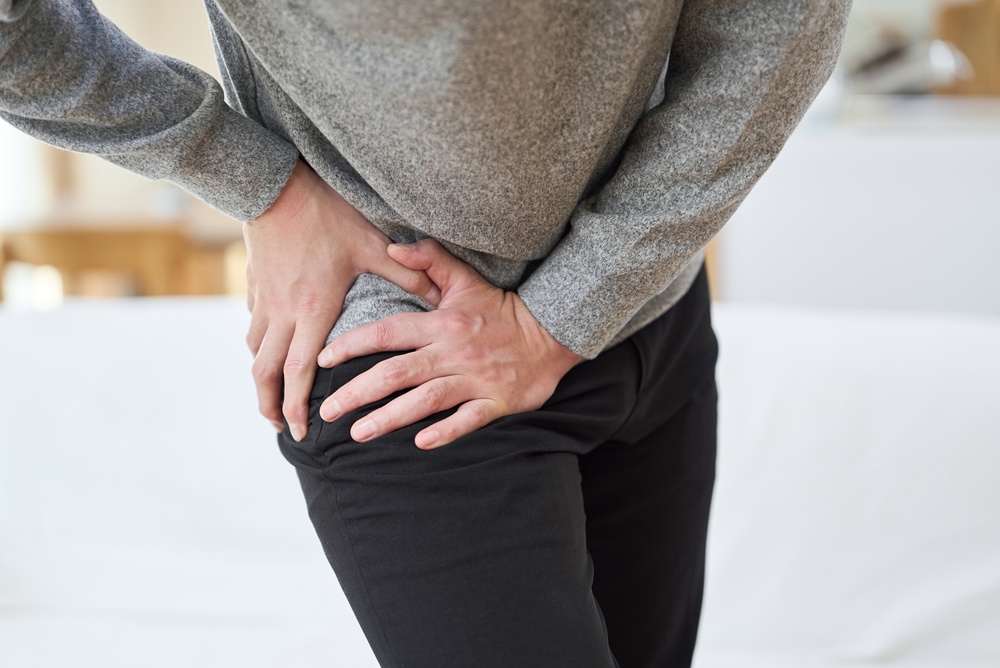
Hip labral tears often cause deep groin pain that may be difficult to pinpoint precisely. This pain typically worsens with prolonged sitting, walking, running, or activities requiring hip rotation. Many patients describe a catching, clicking, or locking sensation in the hip joint during certain movements.
Night pain can be particularly troublesome, especially when lying on the affected side. Stiffness after periods of inactivity commonly accompanies the condition. Some patients experience a sensation of the hip giving way or feeling unstable. Pain may radiate into the buttock, thigh, or knee, sometimes making the source difficult to identify.
The onset of symptoms varies—some patients recall a specific injury while others notice gradual development without clear cause. Athletes often attribute initial symptoms to muscle strains, delaying accurate diagnosis. If hip pain persists despite rest and conservative measures, evaluation for labral pathology is warranted.
Common Symptoms of Hip Labral Tears
- Deep groin pain: Often difficult to localize precisely; may radiate to thigh or buttock
- Mechanical symptoms: Clicking, catching, locking, or popping sensations with movement
- Activity-related pain: Worsening with prolonged sitting, walking, or rotational activities
- Night pain: Discomfort when lying on the affected side
- Stiffness: Particularly after periods of inactivity
- Instability: Sensation of the hip giving way
Causes and Risk Factors
Femoroacetabular impingement (FAI) is the most common cause of hip labral tears. In FAI, abnormal bone shapes create friction between the femoral head and acetabulum during movement, gradually damaging the labrum. Cam impingement involves a bump on the femoral head, while pincer impingement involves extra bone coverage on the socket. Many patients have both types.
Repetitive hip motions in sports and activities contribute significantly to labral tears. Athletes in sports requiring frequent hip flexion and rotation—soccer, hockey, golf, ballet, and martial arts—face elevated risk. Running and cycling can also stress the labrum, particularly when combined with underlying FAI.
Traumatic injuries occasionally cause acute labral tears. Hip dislocations, falls, and motor vehicle accidents can damage the labrum directly. Degenerative changes associated with aging gradually weaken the labrum, making it more susceptible to tearing. Hip dysplasia—a shallow socket present from birth—increases labral stress and tear risk.
Diagnostic Evaluation
Diagnosing hip labral tears requires careful clinical evaluation combined with appropriate imaging. Physical examination assesses hip range of motion, identifies painful movements, and uses specific tests that stress the labrum to reproduce symptoms. The FADIR test (Flexion, Adduction, Internal Rotation) commonly produces pain with labral tears.
X-rays evaluate bone anatomy, identifying FAI morphology, arthritis, and other structural factors contributing to hip problems. While X-rays don’t show the labrum directly, they provide essential information about underlying bone shapes that cause or perpetuate labral damage.
MRI with arthrography provides the most detailed visualization of the labrum. Contrast material injected into the hip joint highlights tears that might otherwise be invisible. This imaging also reveals associated cartilage damage, which influences treatment decisions and prognosis. Diagnostic injection of anesthetic into the hip can confirm the joint as the pain source when imaging is inconclusive.
Conservative Treatment for Hip Acetabular Labral Tear Treatment
Many hip labral tears respond well to conservative treatment, particularly smaller tears in patients with minimal FAI. Activity modification reduces stress on the damaged labrum—avoiding deep squatting, aggressive stretching into end ranges, and high-impact activities allows symptoms to settle.
Physical therapy focuses on hip muscle strengthening, core stability, and movement optimization. Strong gluteal muscles improve hip mechanics and reduce labral stress. Manual therapy techniques address muscle tightness and joint restrictions contributing to symptoms. A well-designed rehabilitation program can significantly reduce pain and improve function.
Anti-inflammatory medications help manage pain and inflammation. Corticosteroid injections into the hip joint can provide significant relief, both as treatment and as confirmation that the hip is the pain source. These injections may offer lasting benefit in some patients, while others experience temporary relief indicating need for further intervention.
Surgical Treatment Options
Hip arthroscopy allows surgical treatment of labral tears through small incisions using a camera and specialized instruments. The surgeon can repair torn labrum tissue by reattaching it to the acetabular rim using small anchors. Labral repair preserves the important sealing function of the labrum and has become the preferred approach when tissue quality permits.
When labral tissue is too damaged for repair, reconstruction using graft tissue may be performed. This technique creates new labral tissue to restore the seal and stability function. Debridement—removing only the damaged portion—is sometimes appropriate for small, frayed tears.
Addressing underlying FAI is essential for successful labral treatment. Bone reshaping during arthroscopy corrects the impingement that caused the tear in the first place. Without addressing FAI, repaired labrum remains at risk for re-tearing.
Recovery and Rehabilitation
Recovery from hip arthroscopy follows a structured progression. Initial phases focus on protecting the repair, controlling pain and swelling, and restoring gentle range of motion. Weight-bearing restrictions and use of crutches are common early on. Physical therapy guides progression through strengthening, functional training, and sport-specific preparation.
Return to full activity typically takes 4-6 months, though some athletes require longer to achieve peak performance. Factors affecting recovery include tear size, repair quality, presence of cartilage damage, and adherence to rehabilitation protocols.
Why Madison Medical for Hip Labral Tear Treatment?
Our hip specialists bring focused expertise in diagnosing and treating labral pathology. Madison Medical sees over 1,200 patients weekly, providing extensive experience with hip conditions ranging from simple to complex. We offer the full spectrum of treatment options from conservative management through advanced arthroscopic surgery.
Our integrated approach ensures seamless coordination between diagnostic evaluation, injection therapy, physical therapy, and surgical intervention when needed. We accept most major insurance plans and offer convenient New Jersey locations with flexible scheduling.
Watch to Learn More
Take the First Step Toward Relief
Hip labral tears can be frustrating, but effective treatment exists. Whether your tear responds to conservative care or requires arthroscopic surgery, most patients achieve significant improvement in pain and function. Early diagnosis and appropriate treatment help prevent progressive joint damage.
Contact Madison Medical to schedule your hip evaluation. Our specialists will thoroughly assess your condition, explain your imaging findings, and recommend the treatment approach best suited to your situation and goals. Don’t let hip pain limit your life any longer.