

Effective Runners Knee Treatment for Active Recovery
That nagging pain around your kneecap that worsens with running, stairs, and squatting is likely runner’s knee—one of the most common overuse injuries affecting active people. Runners knee treatment addresses patellofemoral pain syndrome, a condition where the kneecap doesn’t track properly over the thigh bone, causing irritation and inflammation. Despite its name, this condition affects more than just runners—anyone with repetitive knee stress can develop it.
At Madison Medical, we understand that knee pain threatens not just your running but your overall active lifestyle. Our comprehensive approach identifies the specific factors causing your pain, then develops a targeted treatment plan that addresses biomechanics, strength imbalances, and training errors. Most patients return to full activity with proper treatment and rehabilitation.
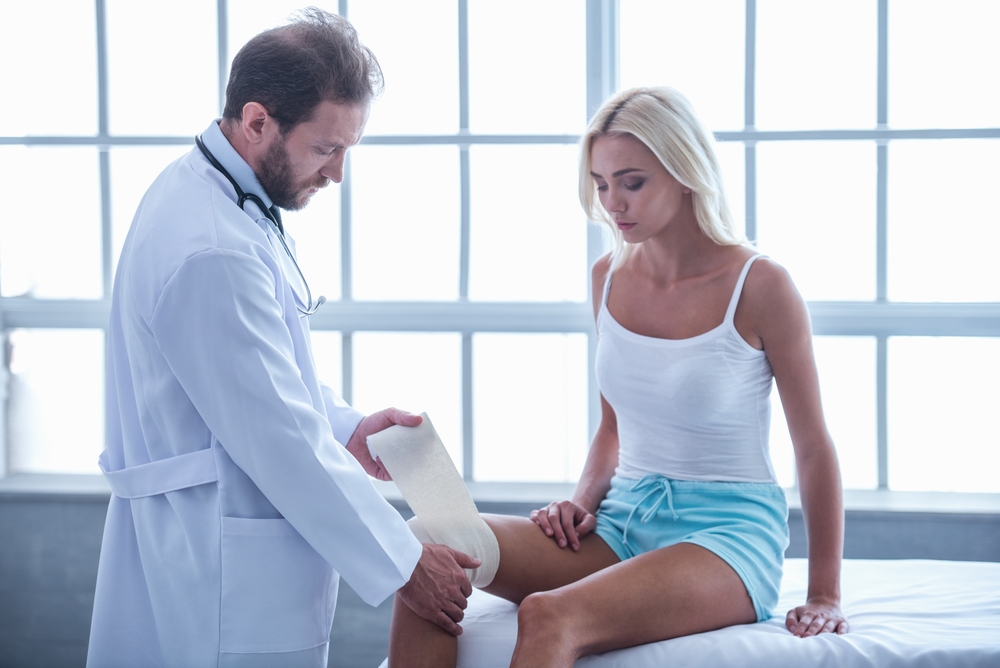
Understanding Runner’s Knee
Runner’s knee, or patellofemoral pain syndrome (PFPS), develops when the patella (kneecap) doesn’t move smoothly in its groove on the femur. Normally, the kneecap glides up and down in the trochlear groove during knee bending and straightening. When this tracking is altered—due to muscle imbalances, structural factors, or overuse—the resulting friction and pressure cause pain.
The cartilage under the kneecap may become irritated, inflamed, or gradually break down with repetitive abnormal stress. While runner’s knee often starts as occasional discomfort, untreated cases may progress to chronic pain that limits activity and eventually leads to cartilage damage.
This condition affects people of all ages and activity levels. Runners are particularly susceptible, but cyclists, hikers, basketball players, and anyone who frequently bends their knees under load can develop PFPS. Women develop runner’s knee more often than men, possibly due to anatomical differences affecting knee alignment.
Symptoms of Patellofemoral Pain Syndrome
Pain around or behind the kneecap is the primary symptom. The pain typically worsens with activities that stress the patellofemoral joint: running, going up or down stairs, squatting, kneeling, or sitting with knees bent for extended periods. Many patients notice their symptoms are worst during or after activity.
The “movie theater sign” describes pain that develops after prolonged sitting with bent knees—common during movies or long car rides. Standing up after sitting may be painful, with symptoms improving after walking around. Swelling around the knee is usually minimal or absent.
You might notice grinding, clicking, or popping sensations during knee movement. Pain often increases with activities requiring deep knee bending. Some patients experience buckling or giving way, though this usually reflects pain avoidance rather than true instability.
What Causes Runner’s Knee?
Training errors are the most common trigger. Suddenly increasing running mileage or intensity, adding hills or stairs without gradual progression, or changing running surfaces can overload the patellofemoral joint before it adapts. The “too much, too soon” pattern underlies most overuse injuries.
Muscle imbalances significantly affect patellar tracking. Weak quadriceps—particularly the vastus medialis obliquus (VMO)—fail to stabilize the kneecap properly. Weak hip muscles allow the thigh to rotate inward during activity, pulling the kneecap out of its groove. Tight hip flexors, hamstrings, and iliotibial band add additional stress.
Structural factors contribute in some cases. Flat feet, high arches, or abnormal foot mechanics alter how forces transmit through the knee. Wide hips, knock knees, or naturally high-riding kneecaps increase PFPS risk. Poor footwear fails to provide necessary support and cushioning.
Risk Factors for Runner’s Knee
- Training errors: Rapid increases in mileage, intensity, or hill work
- Muscle weakness: Particularly quadriceps and hip stabilizers
- Muscle tightness: Tight ITB, hamstrings, and hip flexors
- Foot mechanics: Overpronation or other abnormal foot motion
- Improper footwear: Worn-out or inappropriate running shoes
- Anatomical factors: Wide hips, knock knees, high-riding patella
Diagnostic Evaluation
Physical examination focuses on assessing patellar tracking, identifying muscle tightness and weakness, and reproducing your symptoms. Your provider will evaluate hip and ankle mechanics that may contribute to knee problems. Comparison with your unaffected knee reveals asymmetries.
X-rays may be ordered to assess patellar alignment and rule out other conditions like arthritis. Sunrise or merchant views provide better visualization of patellofemoral alignment than standard knee X-rays. MRI is typically reserved for cases that don’t respond to treatment or when other pathology is suspected.
Gait analysis—observing how you walk and run—identifies movement patterns contributing to abnormal knee loading. This evaluation guides corrective exercises and may reveal shoe or orthotic needs.
Conservative Treatment Approach
Initial treatment focuses on reducing pain and inflammation while addressing underlying factors. Relative rest—modifying rather than stopping activity—allows healing while maintaining fitness. Cross-training with low-impact activities like swimming or cycling takes pressure off the knee.
Physical therapy is the cornerstone of runner’s knee treatment. Strengthening the quadriceps, especially the VMO, improves patellar tracking. Hip strengthening prevents inward thigh rotation during activity. Stretching tight muscles reduces abnormal pulling forces on the kneecap. Core strengthening improves overall lower extremity mechanics.
Ice application after activity reduces inflammation. Over-the-counter anti-inflammatories help manage pain when used appropriately. Patellar taping or bracing may provide immediate symptom relief while rehabilitation progresses. Orthotics address foot mechanics contributing to knee problems.
Advanced Treatment Options
When conservative treatment provides insufficient relief, additional options exist. Corticosteroid injections deliver anti-inflammatory medication directly to the affected area, providing temporary relief that may allow more effective participation in physical therapy.
Platelet-rich plasma (PRP) injections may promote healing in stubborn cases. By concentrating growth factors from your own blood, PRP therapy aims to accelerate tissue repair. Research continues to define optimal protocols for patellofemoral conditions.
Surgery is rarely needed for runner’s knee and is reserved for cases with specific structural problems that don’t respond to comprehensive conservative treatment. Arthroscopic procedures can address cartilage damage or realign the patella in selected patients.
Returning to Running
Gradual return to activity is essential for lasting recovery. Start with short, easy runs on flat surfaces, gradually increasing distance and intensity. The 10% rule—increasing weekly mileage by no more than 10%—prevents re-injury. Adding hills and speed work should wait until pain-free base running is established.
Maintaining strength exercises long-term prevents recurrence. Many runners incorporate hip and quad strengthening as permanent parts of their routine. Proper footwear, replaced regularly, provides ongoing protection.
Why Madison Medical for Runner’s Knee Treatment?
Our sports medicine specialists bring focused expertise to treating running injuries. Madison Medical sees over 1,200 patients weekly, with extensive experience helping runners of all levels overcome patellofemoral pain. We offer comprehensive care including physical therapy, injection treatments, and gait analysis.
Our goal is getting you back to running—and keeping you there. We address root causes, not just symptoms, for lasting results. Most major insurance plans accepted at our convenient New Jersey locations.
Watch to Learn More
Get Back on the Road
Runner’s knee responds well to proper treatment—most patients return to full running without ongoing pain. Early intervention achieves faster recovery and prevents progression to chronic problems. Don’t let knee pain derail your running goals.
Contact Madison Medical to schedule your knee evaluation. Our sports medicine specialists will diagnose your condition, identify contributing factors, and create a treatment plan to get you running comfortably again.