

Understanding Nerve Conduction Studies
Nerve conduction studies measure how quickly and effectively electrical signals travel through your nerves, providing valuable diagnostic information about nerve function and health. When you experience numbness, tingling, weakness, or pain, NCS testing can determine whether nerve damage is present, where it’s located, and how severe it is. This information guides treatment decisions and helps predict recovery potential.
At Madison Medical, we perform nerve conduction studies as part of our comprehensive diagnostic services. These tests help us understand your symptoms, make accurate diagnoses, and develop effective treatment plans for conditions affecting your peripheral nervous system.
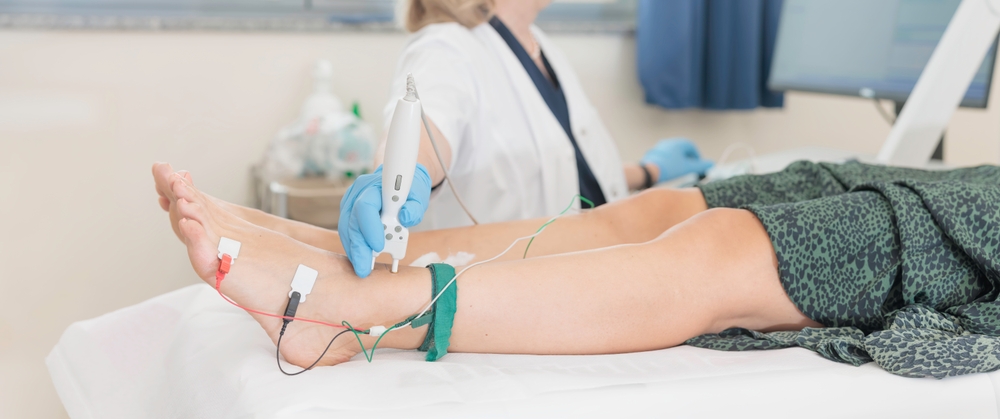
What Nerve Conduction Test Reveals
A nerve conduction test provides objective data about nerve function:
- Speed of nerve signal transmission (conduction velocity)
- Strength of nerve signals (amplitude)
- Location of nerve damage or compression
- Whether damage affects the nerve fiber (axon) or insulation (myelin)
- Severity of nerve involvement
- Pattern of involvement suggesting specific conditions
Conditions Diagnosed with NCS Testing
NCS testing helps diagnose numerous conditions:
Carpal tunnel syndrome: NCS objectively measures median nerve compression at the wrist, confirming diagnosis and severity.
Peripheral neuropathy: Diabetes, vitamin deficiencies, and other conditions causing widespread nerve damage show characteristic patterns on NCS.
Radiculopathy: Nerve root compression from disc herniations or spinal stenosis can be evaluated with NCS.
Nerve injuries: Trauma-related nerve damage is characterized by NCS to guide treatment and predict recovery.
What to Expect During Testing
The Procedure
Small electrodes are placed on your skin over the nerves being tested. Brief electrical pulses stimulate the nerve while recording electrodes measure the response. Testing typically takes 30-60 minutes.
Sensations
You’ll feel brief tingling or tapping sensations during stimulation. While unusual, the test isn’t painful for most patients.
Combined with EMG
NCS is often performed alongside electromyography (EMG), which evaluates muscle electrical activity, for comprehensive neuromuscular assessment.
Watch to Learn More
Why Choose Madison Medical
Our experienced providers perform and interpret NCS testing, ensuring accurate diagnosis that guides effective treatment for your nerve-related symptoms.