

Effective Golfers Elbow Treatment for Lasting Relief
That nagging pain on the inside of your elbow doesn’t just affect your golf game—it can make everyday activities like opening doors, shaking hands, or lifting objects uncomfortable. Golfers elbow treatment addresses medial epicondylitis, a condition caused by overuse of the forearm muscles that flex your wrist and fingers. Despite its name, this painful condition affects many people who’ve never picked up a golf club.
At Madison Medical, our approach to treatment for golfers elbow combines rest strategies, targeted therapies, and rehabilitation exercises to heal the damaged tendon tissue and prevent recurrence. We understand how this condition impacts your work and activities, and we’re committed to getting you back to pain-free function as quickly as possible.
Understanding Golfers Elbow
Golfers elbow occurs when the tendons that attach your forearm muscles to the bony bump on the inside of your elbow become damaged through overuse. These tendons connect to the medial epicondyle, which is why the medical term is medial epicondylitis. The condition develops gradually as repetitive motions create small tears in the tendon tissue faster than your body can repair them.
Unlike tennis elbow, which affects the outside of the elbow, golfers elbow causes pain on the inside. The forearm muscles involved in gripping, wrist flexion, and forearm rotation are affected. This makes many daily activities uncomfortable and can significantly impact both work and recreational activities.
Symptoms Requiring Golf Elbow Treatment
The primary symptom is pain and tenderness on the inside of your elbow, often extending along the inner forearm. This pain typically worsens with certain movements—flexing your wrist, squeezing objects, or twisting your forearm. Many people notice increased discomfort when shaking hands, turning doorknobs, or lifting with the palm facing upward.
Stiffness in the elbow, especially in the morning, commonly accompanies the pain. Some people experience weakness in the hands and wrists, making it difficult to grip objects firmly. Numbness or tingling that radiates into the ring and little fingers may occur if the ulnar nerve, which runs near the affected area, becomes irritated.
Symptoms usually develop gradually rather than from a single injury. They may start as mild discomfort during certain activities and progress to constant pain that affects sleep and daily function. The longer symptoms persist without treatment, the more difficult they become to resolve.
Common Causes and Risk Factors
Golf isn’t the only—or even the primary—cause of golfers elbow. Any activity requiring repetitive gripping, wrist flexion, or forearm rotation can trigger this condition. Racket sports, throwing sports, weight training, and occupational activities involving tools are common culprits. Painting, plumbing, carpentry, and computer work all place repetitive stress on the medial elbow tendons.
Improper technique magnifies the risk, whether in sports or work activities. In golf specifically, poor swing mechanics, using clubs that are too heavy, or gripping too tightly increase tendon stress. Similar form issues in other activities can predispose individuals to develop medial epicondylitis.
Age plays a role, with the condition most common in people 40-60 years old. However, younger athletes and workers can develop golfers elbow, particularly if their activities involve significant forearm stress. Previous elbow injuries may increase susceptibility to tendon problems.
Activities That Can Cause Golfers Elbow
- Sports: Golf, baseball/softball (throwing), tennis, bowling, archery, and weight training
- Occupations: Carpentry, plumbing, painting, butchering, and assembly line work
- Daily activities: Raking leaves, using tools, chopping wood, and repetitive computer use
- Poor technique: Improper form in any activity increases tendon stress significantly
- Equipment issues: Wrong grip size, tool weight, or workspace ergonomics
Diagnosis and Assessment
Diagnosing golfers elbow typically involves physical examination rather than extensive imaging. Your provider will press on the medial epicondyle to check for tenderness and ask you to flex your wrist against resistance to reproduce symptoms. Comparing your affected arm to the unaffected side helps assess weakness and restriction.
X-rays may be ordered to rule out other conditions like arthritis or bone spurs, though they don’t show tendon damage directly. Ultrasound can visualize tendon thickening, tears, and inflammation, providing valuable information for treatment planning. MRI is occasionally used for complex cases or when symptoms don’t respond as expected.
Nerve conduction studies may be recommended if symptoms include significant numbness or tingling, helping determine whether ulnar nerve involvement requires specific treatment.
Conservative Treatment Approaches
Initial golfers elbow treatment focuses on reducing inflammation and protecting the tendon from further damage. Rest from aggravating activities is essential—continuing painful activities delays healing and worsens tendon damage. This doesn’t mean complete immobilization but rather avoiding movements that reproduce pain.
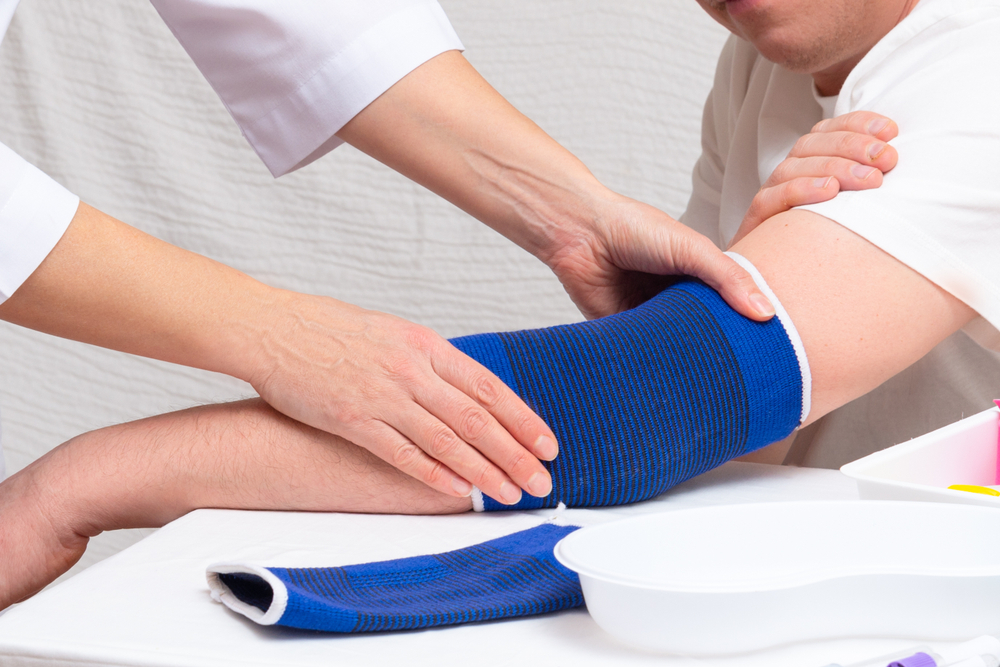
Ice application for 15-20 minutes several times daily reduces inflammation and provides pain relief. Over-the-counter anti-inflammatory medications help manage symptoms when used as directed. A counterforce brace worn on the upper forearm can reduce strain on the affected tendon during activities.
Physical therapy addresses muscle imbalances, improves flexibility, and gradually strengthens the forearm muscles. Eccentric exercises—slowly lowering a weight after lifting it—have shown particular effectiveness for tendon healing. Stretching the forearm muscles multiple times daily maintains flexibility and promotes healing.
Advanced Treatment Options
When conservative treatment doesn’t provide sufficient relief, injection therapies offer the next level of intervention. Corticosteroid injections can rapidly reduce inflammation and pain, though their long-term benefits are debated. Platelet-rich plasma (PRP) injections deliver concentrated healing factors to the damaged tendon, promoting tissue repair.
Shockwave therapy uses acoustic waves to stimulate blood flow and healing in chronic tendinopathy. This non-invasive treatment can break up scar tissue and promote tissue regeneration without medication or injection. Multiple sessions are typically needed for optimal results.
Dry needling or percutaneous tenotomy involves inserting a needle into the damaged tendon to stimulate healing. These techniques break up scar tissue and promote fresh blood flow to the area, potentially accelerating recovery in stubborn cases.
Surgical Options
Surgery for golfers elbow is rarely needed—less than 10% of patients require operative treatment. Surgery typically involves removing damaged tissue from the affected tendon and reattaching healthy tissue to the bone. Both open and arthroscopic techniques are available.
Surgical treatment is considered when symptoms persist despite 6-12 months of comprehensive conservative care. Patients with complete tendon tears or those whose jobs require immediate return to demanding activity may be candidates for earlier surgical intervention. Recovery requires several months of rehabilitation.
Why Madison Medical for Golfers Elbow Treatment?
Our team brings comprehensive expertise in treating elbow conditions. Madison Medical sees over 1,200 patients weekly, giving us extensive experience with medial epicondylitis at all severity levels. We offer the full spectrum of treatments from physical therapy and bracing to injections and regenerative medicine.
Our integrated approach coordinates care between physical therapists, sports medicine specialists, and orthopedic surgeons. We focus on identifying and correcting the underlying causes of your condition, not just treating symptoms. Most major insurance plans accepted at our convenient New Jersey locations.
Watch to Learn More
Get Back to Pain-Free Activity
Golfers elbow responds well to proper treatment, but ignoring the problem or pushing through pain typically worsens the condition. Early intervention leads to faster recovery and better long-term outcomes. Most patients experience significant improvement within a few months with appropriate treatment.
Contact Madison Medical to schedule your elbow evaluation. Our specialists will diagnose your condition, explain your treatment options, and develop a personalized plan to eliminate your pain and restore full function. Whether you’re a golfer looking to return to the course or someone whose work requires pain-free arm function, we’re here to help.