

Understanding Your Herniated Disc Treatment Options
A herniated disc can transform your life from active to agonizing, with pain that radiates into your arms or legs, numbness that won’t quit, and weakness that makes everyday activities challenging. Herniated disc treatment has evolved significantly, offering multiple pathways to relief depending on your specific situation. Most importantly, the vast majority of people with herniated discs improve without surgery.
At Madison Medical, we provide comprehensive treatment for herniated disc conditions affecting the lower back and neck. Our approach emphasizes accurate diagnosis, personalized treatment planning, and access to the full spectrum of interventions—from conservative care through advanced surgical options when necessary.
What Is a Herniated Disc?
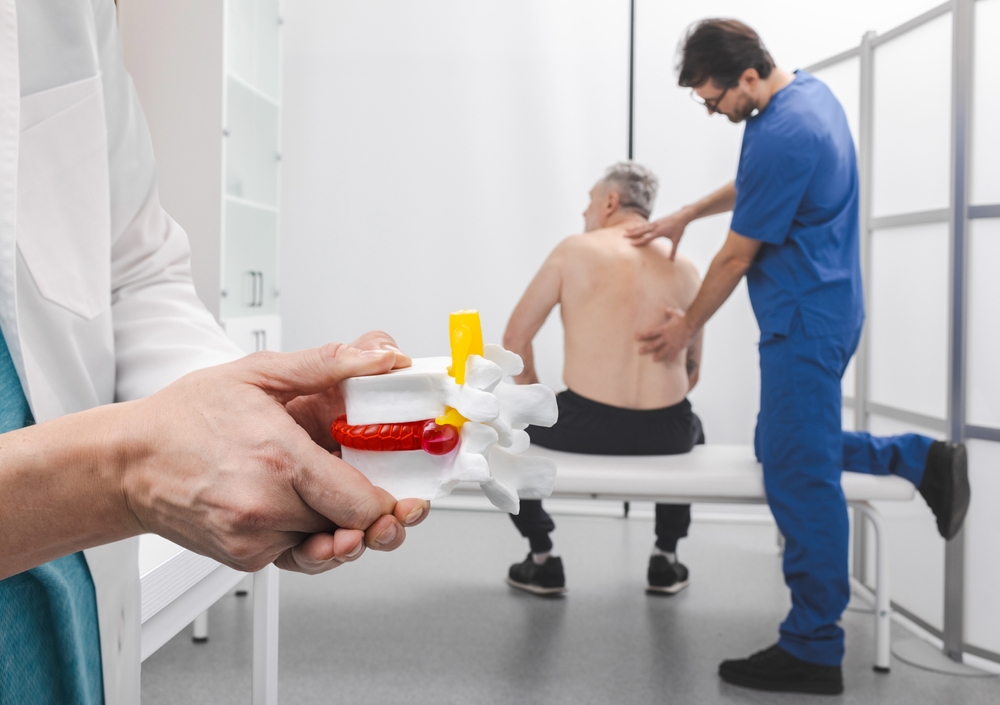
Your spinal discs are rubbery cushions between vertebrae, each consisting of a tough outer ring (annulus fibrosus) and a softer gel-like center (nucleus pulposus). A herniated disc occurs when the nucleus pushes through a tear in the annulus, potentially compressing nearby spinal nerves. This compression causes the characteristic pain, numbness, and weakness associated with disc herniation.
Disc herniations occur most commonly in the lower back (lumbar spine) and neck (cervical spine), though they can affect any spinal level. The specific herniated disc symptoms you experience depend on which disc is affected and which nerves are compressed. Understanding your particular herniation guides treatment selection.
Recognizing Herniated Disc Symptoms
Lumbar disc herniations typically cause lower back pain that radiates into the buttock and down the leg—a pattern called sciatica. The pain may feel like a sharp, burning sensation or a deep ache. Numbness or tingling often follows the nerve distribution, commonly affecting the outer calf, foot, or toes. Weakness in leg muscles may cause difficulty lifting the foot or pushing off when walking.
Cervical disc herniations produce neck pain that radiates into the shoulder, arm, and hand. Specific patterns of numbness and weakness indicate which nerve root is affected. Some patients develop radiating symptoms without significant neck pain. Hand grip weakness and fine motor difficulties may develop if compression is significant.
Symptoms often worsen with certain positions or activities. Sitting, coughing, sneezing, and bending forward typically aggravate lumbar herniations. Looking up or down may worsen cervical symptoms. Many people notice their symptoms fluctuate—improving with rest and worsening with activity.
Seek immediate medical attention if you experience progressive weakness, loss of bladder or bowel control, or numbness in the groin area. These symptoms suggest severe nerve compression requiring urgent evaluation.
Warning Signs Requiring Immediate Attention
- Progressive weakness: Rapidly worsening strength in arms or legs
- Bladder dysfunction: Difficulty urinating or loss of bladder control
- Bowel dysfunction: Loss of bowel control or inability to have bowel movements
- Saddle anesthesia: Numbness in groin, inner thighs, or buttocks
- Bilateral symptoms: Symptoms affecting both legs simultaneously
Causes and Risk Factors
Disc herniation typically results from gradual wear-and-tear called disc degeneration. As we age, discs lose water content, becoming less flexible and more prone to tearing. This normal aging process makes herniations more common in people between 30 and 50 years old. Sometimes a single awkward movement or lift can trigger herniation in an already weakened disc.
Occupational factors contribute significantly. Jobs requiring repetitive lifting, pulling, pushing, bending, or twisting increase herniation risk. Prolonged sitting, especially with poor posture, places additional stress on lumbar discs. Vibration from vehicles or equipment accelerates disc degeneration.
Excess body weight increases load on spinal discs, particularly in the lower back. Smoking reduces disc nutrition and accelerates degeneration. Genetic factors influence disc structure and susceptibility to herniation. Previous back injuries predispose certain discs to problems.
Diagnostic Evaluation
Accurate diagnosis starts with detailed history and physical examination. Your provider will assess your symptoms, identify movement patterns that worsen or relieve pain, and perform neurological testing of reflexes, strength, and sensation. This examination often provides enough information to guide initial treatment.
MRI is the gold standard imaging study for herniated discs, providing detailed visualization of disc anatomy, herniation size and location, and nerve compression. X-rays don’t show discs directly but help evaluate bone alignment and identify other conditions. CT scans may be used when MRI isn’t available or contraindicated.
Nerve conduction studies and electromyography (EMG) assess nerve function when symptoms or examination findings suggest nerve damage. These tests help determine the severity and location of nerve involvement, particularly useful when multiple levels appear abnormal on imaging.
Conservative Treatment Approaches
Most herniated discs improve with conservative treatment within 6-12 weeks. Initial management includes activity modification—avoiding movements that aggravate symptoms while maintaining gentle activity to prevent deconditioning. Short-term rest may help acute flares, but prolonged bed rest is counterproductive.
Medications address pain and inflammation. Over-the-counter anti-inflammatories and pain relievers work for many patients. Prescription options include muscle relaxants for spasm, oral steroids for acute inflammation, and nerve pain medications like gabapentin for radiating symptoms.
Physical therapy plays a central role in herniated disc treatment. A structured program improves core stability, corrects posture, and teaches movement strategies that protect your spine. Specific exercises address the direction of disc herniation—extension exercises for most lumbar herniations, flexion-based approaches when extension worsens symptoms.
Interventional Treatment Options
Epidural steroid injections deliver anti-inflammatory medication directly to the area of nerve compression. These injections can significantly reduce inflammation and pain, often providing enough relief to participate effectively in physical therapy. Various injection approaches target different spinal regions and herniation locations.
Transforaminal epidural injections place medication at the specific nerve root affected by the herniation. Interlaminar epidural injections access the epidural space between vertebrae. Caudal injections approach through an opening at the base of the spine. Your provider will select the approach best suited to your particular herniation.
Nerve root blocks can serve both diagnostic and therapeutic purposes. By numbing a specific nerve, we can confirm it’s the source of your symptoms while providing temporary relief. Some patients benefit from a series of injections spaced over several months.
Surgical Treatment
Surgery becomes an option when conservative treatment fails to provide adequate relief after several months, when neurological deficits progress, or when severe symptoms significantly impact quality of life. The good news is that when surgery is appropriate, outcomes are generally excellent.
Microdiscectomy is the most common surgical procedure for lumbar disc herniation. Through a small incision, the surgeon removes the portion of disc material compressing the nerve. Most patients experience rapid relief of leg symptoms after this minimally invasive procedure, with return to normal activity within weeks.
Cervical disc surgery may involve anterior cervical discectomy and fusion (ACDF) or cervical disc replacement. ACDF removes the damaged disc and fuses adjacent vertebrae for stability. Disc replacement preserves motion by substituting an artificial disc. The best approach depends on your specific anatomy and overall spine condition.
Why Madison Medical for Herniated Disc Treatment?
Our spine specialists bring comprehensive expertise in both conservative and surgical treatment of disc herniations. Madison Medical sees over 1,200 patients weekly, providing the high-volume experience associated with optimal outcomes. We emphasize exhausting non-surgical options before recommending surgery, ensuring you’ve explored every appropriate treatment avenue.
Our integrated team includes pain management specialists, physical therapists, and spine surgeons who collaborate on complex cases. From your first evaluation through complete recovery, we coordinate all aspects of your care. Most major insurance plans accepted at our convenient New Jersey locations.
Watch to Learn More
Start Your Path to Relief
Living with herniated disc pain is exhausting and limiting, but effective treatment options exist. Whether your herniation responds to conservative care or ultimately requires surgery, the vast majority of patients achieve significant improvement. The key is getting proper diagnosis and following an appropriate treatment pathway.
Contact Madison Medical to schedule your spine evaluation. Our specialists will thoroughly assess your condition, explain your imaging findings clearly, and develop a personalized treatment plan. From physical therapy and injections to surgical options when needed, we have the expertise and resources to help you move past your pain.