

Comprehensive Spinal Stenosis Treatment
When narrowing of the spinal canal causes leg pain, numbness, or walking difficulties, effective spinal stenosis treatment can restore your mobility and comfort. Spinal stenosis is a common degenerative condition that typically develops gradually, compressing the nerves in your spine and causing symptoms that worsen over time without treatment. The good news is that most patients improve significantly with appropriate care.
At Madison Medical, our spine specialists provide comprehensive spinal stenosis evaluation and treatment. We accurately diagnose the location and severity of your stenosis, then develop personalized treatment plans ranging from physical therapy and medications to injections and surgical referral when needed. Our goal is relieving your symptoms while preserving spinal function.
Understanding Spinal Stenosis
Spinal stenosis refers to narrowing of the spaces within your spine. The spinal canal houses the spinal cord and nerve roots, which exit through openings called foramen. When these spaces narrow from degenerative changes, bone spurs, bulging discs, or thickened ligaments, the resulting compression causes symptoms.
Lumbar stenosis affects the lower back and is most common. Cervical stenosis affects the neck and can be more serious because the spinal cord itself may be compressed. Thoracic stenosis is rare due to the stabilizing effect of the ribcage.
The condition typically develops after age 50 as degenerative changes accumulate. Some people are born with smaller spinal canals, making them more susceptible to symptomatic stenosis. Prior spine surgery or injury may also contribute.
Recognizing Stenosis Symptoms
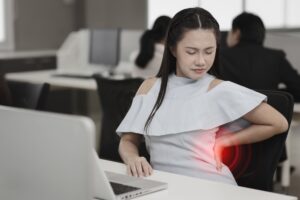
Lumbar stenosis characteristically causes neurogenic claudication—leg pain, numbness, or weakness that develops with walking or standing and improves with sitting or bending forward. Many patients notice they can walk longer when leaning on a shopping cart. Symptoms are typically worse going downhill and better going uphill.
Back pain may or may not accompany leg symptoms. Some patients have primarily back pain, others primarily leg symptoms. The pattern helps distinguish stenosis from other causes of back and leg pain.
Cervical stenosis may cause neck pain, arm symptoms similar to lumbar stenosis effects on legs, and potentially myelopathy—spinal cord dysfunction causing hand clumsiness, balance problems, and walking difficulties.
Spinal Stenosis Symptoms
- Leg pain with walking: Pain, cramping, or heaviness that develops with activity
- Relief with bending: Symptoms improve when sitting or leaning forward
- Numbness and tingling: Sensations in legs, feet, or arms depending on location
- Weakness: Leg weakness affecting walking or arm weakness in cervical stenosis
- Balance problems: Particularly with cervical stenosis affecting the spinal cord
- Limited walking distance: Progressively shorter distances before symptoms force rest
Diagnostic Evaluation
Physical examination assesses your gait, neurological function, and which positions provoke or relieve symptoms. The classic finding of improvement with spinal flexion helps confirm stenosis. Comparing your symptoms to examination findings guides imaging and treatment decisions.
MRI is the primary imaging study for stenosis, clearly showing canal narrowing, disc changes, and nerve compression. X-rays assess bone alignment and stability. CT scans provide excellent bone detail when needed. Nerve conduction studies may help when the diagnosis is uncertain.
Conservative Treatment Options
Many patients manage stenosis successfully without surgery. Physical therapy strengthens core muscles, improves flexibility, and teaches positions and movements that minimize symptoms. Flexion-based exercises often help because bending forward opens the narrowed canal.
Medications manage pain and inflammation. NSAIDs provide first-line relief. Neuropathic pain medications like gabapentin help nerve-related symptoms. Oral steroids may help during acute flares.
Epidural steroid injections deliver anti-inflammatory medication directly to compressed nerves. Many patients experience significant relief lasting weeks to months. Injections can be repeated periodically as needed and may delay or eliminate the need for surgery.
Surgical Treatment
Surgery is considered when conservative treatment fails to adequately control symptoms or when neurological function progressively worsens. Decompressive surgery removes the bone, disc, and ligament tissue causing compression, widening the spinal canal.
Laminectomy is the most common procedure, removing part of the vertebral arch. Foraminotomy enlarges the nerve root exit openings. Minimally invasive techniques reduce tissue disruption when appropriate. Fusion may be added when decompression creates instability.
Surgical outcomes are generally good for appropriately selected patients. Leg pain typically improves more reliably than back pain. Walking endurance increases significantly for most patients.
Living with Spinal Stenosis
Activity modification helps manage symptoms while maintaining quality of life. Learning which positions and activities provoke symptoms allows you to adapt accordingly. Many patients find they can remain quite active with appropriate accommodations.
Weight management reduces spinal stress. Regular exercise, modified as needed for symptoms, maintains overall health and supports spine function. Swimming and stationary cycling are often well-tolerated because of forward-leaning positions.
Ergonomic adjustments at home and work minimize symptom provocation. Standing desks with anti-fatigue mats, supportive seating, and strategic rest breaks help manage daily activities.
Understanding that stenosis is typically a slowly progressive condition helps set appropriate expectations. Treatment goals focus on managing symptoms and maintaining function rather than “curing” the underlying degenerative changes. With proper management, most patients maintain good quality of life.
Why Madison Medical for Spinal Stenosis Treatment?
Our spine specialists bring comprehensive expertise to stenosis diagnosis and treatment. Madison Medical sees over 1,200 patients weekly, with access to advanced imaging, injection treatments, and surgical referral when needed. We emphasize conservative care while ensuring timely intervention when appropriate.
Our integrated approach coordinates physical therapy, pain management, and surgical options seamlessly. Most major insurance accepted at our convenient New Jersey locations.
Watch to Learn More
Restore Your Mobility
Spinal stenosis is common but treatable. Most patients achieve meaningful improvement in symptoms and walking ability with appropriate care. Early treatment often achieves better outcomes than waiting for advanced symptoms.
Contact Madison Medical to schedule your spine evaluation. Our specialists will assess your condition and develop a personalized treatment plan to restore your comfort and mobility.