

Expert UCL Sprain Treatment for Throwing Athletes
For throwing athletes experiencing inner elbow pain, proper ucl sprain treatment can mean the difference between returning to competition and career-ending injury. The ulnar collateral ligament (UCL) stabilizes the elbow during the extreme valgus stress of throwing, and damage to this ligament threatens the ability to throw at competitive levels. Understanding the spectrum of UCL injuries—from mild sprains to complete tears—guides treatment decisions and return-to-throwing timelines.
At Madison Medical, our sports medicine specialists provide expert evaluation and treatment for UCL injuries. We accurately diagnose injury severity, identify contributing factors, and develop individualized treatment plans. Whether you need rehabilitation to heal a partial tear or surgical reconstruction for a complete rupture, we guide you through every step toward returning to your sport.
Understanding UCL Injuries
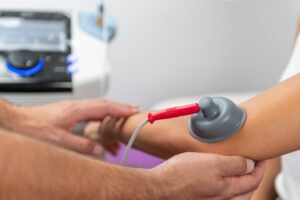
The ulnar collateral ligament complex on the inner (medial) elbow provides primary stability against the valgus stress that occurs during throwing. During the acceleration phase of throwing, forces on the UCL exceed its theoretical failure strength—only the dynamic support from surrounding muscles prevents rupture with each throw.
Repetitive stress causes microscopic damage that accumulates over time. This chronic attenuation may eventually lead to partial tearing or complete rupture. Some athletes experience gradual performance decline before experiencing acute pain, while others suffer sudden complete tears during a single pitch.
UCL injuries occur predominantly in overhead throwing athletes, particularly baseball pitchers. However, javelin throwers, quarterbacks, tennis players, and volleyball players also sustain these injuries. The condition has become increasingly common at younger ages as youth sports intensify.
Recognizing UCL Injury Symptoms
Medial elbow pain during throwing is the hallmark symptom, typically worst during the late cocking and early acceleration phases of throwing. Pain may develop gradually with overuse or suddenly with acute tears. Some athletes report a “pop” sensation when complete rupture occurs.
Decreased throwing velocity and loss of control often precede or accompany pain. The elbow may feel unstable or like it’s “giving out” during throwing. Ulnar nerve symptoms—tingling or numbness in the ring and small fingers—may occur due to the nerve’s proximity to the UCL.
Between throwing sessions, the elbow may feel relatively normal. Pain is reproduced with valgus stress testing during examination. Swelling and tenderness over the medial elbow are usually present.
Risk Factors for UCL Injury
- High pitch counts: Throwing too many pitches without adequate rest
- Year-round throwing: No off-season for tissue recovery
- Poor mechanics: Technique flaws increasing elbow stress
- Breaking pitches: Particularly at young ages before skeletal maturity
- Fatigue: Continuing to pitch when tired
- Inadequate conditioning: Weak supporting musculature
Diagnostic Evaluation
Physical examination includes valgus stress testing to assess ligament integrity. The moving valgus stress test specifically evaluates the UCL during simulated throwing motion. Comparison with the uninjured arm identifies asymmetry.
MRI, particularly with contrast (MR arthrography), visualizes ligament damage and associated findings. Imaging distinguishes partial from complete tears and identifies other pathology that may contribute to symptoms. Ultrasound can also assess the UCL dynamically.
Stress X-rays measure how much the elbow opens under valgus load, comparing to the uninjured side. Increased gapping indicates ligament insufficiency.
Conservative Treatment
Partial UCL tears may heal with conservative treatment, particularly in non-throwing athletes or recreational players. Rest from throwing allows the ligament to heal. Physical therapy maintains elbow motion and strengthens supporting muscles. Gradual return to throwing follows structured interval programs.
PRP injections may accelerate healing for partial tears. Some athletes achieve return to competitive throwing without surgery, though this depends on injury severity and sport demands.
UCL Reconstruction (Tommy John Surgery)
Complete UCL tears in competitive throwing athletes typically require reconstruction—the procedure commonly called Tommy John surgery. A tendon graft (usually from the forearm or hamstring) replaces the damaged ligament. Modern surgical techniques have improved outcomes and return rates.
Recovery from UCL reconstruction takes 12-18 months before return to competitive throwing. Rehabilitation progresses through phases: protecting the reconstruction, restoring motion and strength, and gradually returning to throwing. The extended timeline requires patience but produces excellent results in most cases.
Preventing UCL Injuries
Pitch count limits based on age protect developing elbows. Adequate rest between pitching appearances allows tissue recovery. Avoiding year-round throwing gives ligaments time to heal accumulated microtrauma.
Proper throwing mechanics reduce elbow stress. Video analysis can identify technique flaws that overload the UCL. Conditioning programs strengthen muscles that dynamically stabilize the elbow during throwing.
Recognizing early warning signs—medial elbow pain, declining velocity, loss of control—allows intervention before complete tear occurs. Pitching through pain is the fastest path to serious injury.
Internal brace augmentation is a newer surgical technique that may allow faster recovery in some cases. This approach reinforces the healing ligament with strong suture tape. Candidacy depends on injury pattern and athlete factors.
Rehabilitation after surgery is as important as the surgical procedure itself. Working with experienced sports physical therapists who understand throwing mechanics optimizes recovery and return-to-sport outcomes.
Why Madison Medical for UCL Sprain Treatment?
Our sports medicine specialists understand the demands facing throwing athletes with UCL injuries. Madison Medical sees over 1,200 patients weekly, with expertise in both conservative management and surgical coordination for elbow injuries. We work with athletes at all levels to restore throwing function.
Our comprehensive approach addresses injury treatment, mechanical factors, and prevention. Most major insurance accepted at our convenient New Jersey locations.
Watch to Learn More
Protect Your Throwing Career
UCL injuries are serious but treatable. Early evaluation of medial elbow pain allows conservative treatment before complete rupture occurs. Even complete tears can be successfully reconstructed with excellent return-to-sport rates.
Contact Madison Medical to schedule your elbow evaluation. Our specialists will diagnose your UCL injury and develop a treatment plan to get you back to throwing at your best.